Posts

Showing posts with the label Canada

Visualizing Canadian Energy Flows with d3.js Sankey diagrams

I have been working with processing.js but wanted to learn a little about d3js for visualizations, so took a look at Mike Bostock 's d3.js plugin for making Sankey diagrams . So I pulled down two documents that had energy flow diagrams for Canada: 2006. Powerful Connections: Priorities and Directions in Energy Science and Technology in Canada. The Report of the National Advisor Panel on Sustainable Energy Science and Technology , Natural Resources Canada, p76. 2008. Report on Energy Supply and Demand in Canada Catalogue no. 57-003-X, Statistics Canada, p121. I extracted the data from these diagrams and built these interactive Sankey energy flows: 2003 Canadian Energy Flows 2007 Canadian Energy Flows Note that these two documents are looking at slightly different views of energy flows (and 2007 does not include Uranium ), so can't be compared directly. If you have any (preferably Canadian) datasets that could be presented in this fashion, let...

Canada not involved in Aid transparency

The Aid Revolution begins with XML / The Aid Revolution Begins Here Publish What You Fund: The Global Campaign for Aid Transparency International Aid Transparency Initiative (IATI) Very oddly, Canada ( correction: Canadian government : see below) is NOT involved in this initiative , but the following countries and organizations are:    World Bank    Asian Development Bank    The European Commission (EC)    United Nations Development Programme (UNDP)    Global Alliance for Vaccines and Immunisation (GAVI)    Hewlett Foundation    Australia - AusAID    Denmark - Ministry of Foreign Affairs    Finland - Ministry for Foreign Affairs    Germany - Federal Ministry for Economic Cooperation and Development (BMZ)   Ireland - Irish Aid   Netherlands – Dutch Ministry of Foreign Affairs – Development Cooperation   New Zealand – NZAID ...

Comparative E-Government: Canada

Comparative E-Government Integrated Series in Information Systems Volume 25, 2010, DOI: 10.1007/978-1-4419-6536-3 Chapters involving Canada: Digital Government in North America: A Comparative Analysis of Policy and Program Priorities in Canada, Mexico, and the United States E-government Maturity over 10 Years: A Comparative Analysis of E-government Maturity in Select Countries Around the World  E-government and Federalism in Italy and Canada—A Comparative Assessment Adoption of Web 2.0 by Canadian and US Governments

What is Open Gov Data? The Sunlight Foundation: Ten Principles for Opening Up Government Information

My earlier entry/rant, It's not Open Data, so stop calling it that... about the non-Open Data nature of a number of Canadian cities' Open Data initiatives is supported by the just released Ten Principles for Opening Up Government Information from the Sunlight Foundation . Specifically: 6. Non-discrimination "Non-discrimination" refers to who can access data and how they must do so. Barriers to use of data can include registration or membership requirements. Another barrier is the uses of "walled garden," which is when only some applications are allowed access to data. At its broadest, non-discriminatory access to data means that any person can access the data at any time without having to identify him/herself or provide any justification for doing so. 8. Licensing The imposition of "Terms of Service," attribution requirements, restrictions on dissemination and so on acts as barriers to public use of d...

It's not Open Data, so stop calling it that...

While it is a great positive change that data is being released through numerous efforts around the world, data release is not the same as Open Data release . A number of Canadian cities have announced Open Data initiatives, but they are not releasing Open Data. They are just releasing data. Of course, this is better than not releasing data. But let's at least be honest about what we are doing. Why aren't they Open Data? Because their licenses are not Open Data licenses: Not Open Data : Edmonton: " The City may, in its sole discretion, cancel or suspend your access to the datasets without notice and for any reason ..." - from Terms of Use Not Open Data : Vancouver: "The City may, in its sole discretion, cancel or suspend your access to the datasets without notice and for any reason..." - Terms of Use Not Open Data : Ottawa: " The City may, in its sole discretion, cancel or suspend your access to the datasets without notice and f...

Government and Open Source Software

A colleague of mine is having some difficulties getting an Open Source solution to be made available within his government organization. In providing support to him, I've collected the below resources. Of particular interest is the 2007 Government Open Source Policies from the Center for Strategic and International Studies , listing the Open Source policies of hundreds of national, state/province/territory and local governments (including Canada's). 2009 The DoD and Open Source Software. Oracle White Paper 2009 Open source software could save millions (Scotland) 2009 Open Source Vendors welcome new UK Government policy, but want more action 2009 Liam Maxwell The High Cost of government IT 2009 Guide to Open Source Software for Australian Government Agencies 2009 D.Gatto & J.Herzfeld. Department of Defense Debunks Myths and Endorses Use of Open Source Software 2008. The acquisition of (open-source) software A guide for ICT buyers in the public and semi-public sectors (Dut...

Canadian Science Policy Conference

The Canadian Science Policy Conference is to held in Toronto, October 28-30, 2009. While the five themes , sub-panels and speakers looking both interesting and relevant, I am disappointed and perhaps a little alarmed that there appears to be no (explicit) mention of research data issues, research data management or research data archiving, despite the series of Canadian consultations examining these issues ( National Consultation on Access to Scientific Research Data (NCASRD) , 2004; National Data Archive Consultation Building Infrastructure for Access to and Preservation of Research Data , 2002; Data Access in Canada: Issues for Global Change Research” (Royal Society of Canada), 1996 ) and indicating the pressing need for 1) A research data archiving strategy and policy; 2) A research data archive. I think this is an issue that has too long been neglected (although there are some positive signs, like International Polar Year ), impacting Canadian science and innovation, especiall...

Canadian Federal Natural Resources Department selects Open Source library system

Image
This is old news from February, but I seemed to have missed it: the NRCan (Federal Natural Resources ministry in Canada) libraries have chosen the Open Source Evergreen integrated library system (ILS). Kudos to my colleague George Duimovich and others at the NRCan library . Here is the opening search interface . It is great to see sensible Web 2.0 and Open Source choices can be made in such organizations.

Appointed to Canadian National Committee for CODATA

I am happy to announce that I have just been appointed to the Canadian National Committee for CODATA , which is an ICSU committee. I have been an observer on this committee since 1999, and look forward to continuing my work with this committee. :-) CODATA wikipedia entry ICSU wikipedia entry

Open Access for Quebec FRSQ funded health research publications

The Quebec health research fund ( Fonds de la recherche en santé du Québec (FRSQ) ) has mandated all full or partially funded projects to publish their research outputs ("peer reviewed publications") to an open access site not less than 6 months after publication. This policy went into effect January 1 2009. While this is excellent news, it would have been even better news if the policy took a broader view of research outputs and included research data in its open access policy, mandating research data management and release, similar to the policies of CIHR , Ontario Institute for Cancer Research (OICR) , NIH , Genome Canada , UK Research Councils , the Australian government , the European Research Council (ERC) and others. The benefits of sharing research data - especially health data - are well documented .

Canadian Government RFI on Open Source Software

The Canadian government has an RFI concerning Free and Open Source Software (" No Charge Licensed Software "): This is not a bid solicitation. Canada is seeking feedback from the Industry with respect to No Charge Licensed Software.... Canada has a Request for Information (RFI) related to No-Charge Licensed Software (typically referred to as Free and Open Source Software or FOSS and also applicable to freeware).... The purpose of the RFI is to help the Government of Canada (GC) put together guidelines related to the planning, acquisition, use and disposal of No Charge Licensed Software (NCLS). While there is already significant interest for No Charge Licensed Software within the Government of Canada there are many questions being asked, see below. There exists operationally a requirement to produce common guidelines that are fair, open and transparent and can be applied consistently across departments.... In the Overview, the Crown provided a definition for No Charge Licensed...

Presentation: Tom Brzustowski: Suggestive Patterns in Canadian Industrial R&D Spending

Tom Brzustowski (ex-NSERC president, now University of Ottawa RBC Financial Group Professor in the Commercialization of Innovation and Chair of the board Institute for Quantum Computing , Waterloo) is giving a talk this Friday January 16 entitled " Looking for Suggestive Patterns in Canadian Industrial R&D Spending ". Abstract: R&D spending is an imperfect, but widely used, measure of innovation. This paper describes the search for suggestive patterns in Canadian industrial R&D spending, as reported in the data published annually by Re$earch Infosource Inc. A very important feature of this proprietary data base is that the companies involved are named, and thus the data can be combined with information from other sources. The discussion has three parts. The first deals with the "calibration" of the data base, and a discussion of its limitations, beginning with the reporting of R&D spending. The second describes and explains the performance of a...

Article: Canadian Federal Support for University Research Commercialization

Rasmussen [ 1 ] does a thorough examination of Canadian federal government programs and organizations supporting the commercialization of university research. This work is based on background research and interviews in January 2006 with 28 " ...policy makers, program managers, policy researchers, university administrators, and program users. .", including " A case description was written based on the collected material and later verified by several key people at Canadian agencies ". For those following federal university commercialization activities, this work is an excellent review of the recent state of these programs, activities and organizations. It should be noted that this research is part of a larger and broader research effort [ 2 ] benchmarking commercialization of research in Canada, Finland, Ireland, the Netherlands, Scotland, and Sweden. The list of the Canadian interviewees can be found in this larger work (p.52). Programs: " Compared to most co...

Canadian Minister of Industry Accepts S&T Strategy's Sub-Priorities Recommended by the Science, Technology and Innovation Council

The Industry Canada minister accepted (Sept 2 2008) recommendations from the Science, Technology and Innovation Council on the sub-priorities of the four priority areas identified in the 2007 Science and Technology (S&T) Strategy ( The State of Science & Technology in Canada , 2006, Council of Canadian Academies ). The recommended sub-areas are: S&T priority: Environmental science and technologies Sub-priorities : Water (health, energy, security); cleaner methods of extracting, processing and using hydrocarbon fuels, including reduced consumption of these fuels S&T priority: Natural resources and energy Sub-priorities : Energy production in the oil sands; Arctic (resource production, climate change adaptation, monitoring); biofuels, fuel cells and nuclear energy S&T priority: Health and related life sciences and technologies Sub-priorities : Regenerative medicine; neuroscience; health in an aging population; biomedical engineering and medical technologies S&T p...

CIHR Health Summit: "Data Data Everywhere: Access and Accountability"

The Canadian Institutes for Health Research ( CIHR ) is hosting a Health Summit " Data Data Everywhere: Access and Accountability ", October 20-21 2008, Toronto, Ontario, Canada. Here is the tentative program: Day 1 (October 21) Welcoming Remarks Alain Beaudet, President, CIHR Keynote Panel - Setting the Stage: Information Needs of the Health of Canadians Robyn Tamblyn Terry Sullivan, Chief Executive Officer, Cancer Care Ontario Penny Ballem, Chair, CIHR-IHSPR Health Information Summit Steering Committee Plenary Session 1: Secondary Use of Data: Different Perspectives Wendy Armstrong, Board Member, Consumers’ Association of Alberta Robert Ouellet, President Elect, Canadian Medical Association Dorothy Pringle, Professor Emeritus, Lawrence S. Bloomberg, Faculty of Nursing University of Toronto Jack Tu, Senior Scientist, Institute for Clinical Evaluative Studies Plenary Session 2: Ethics and Privacy William Lowrance, Consultant Pat Kosseim, General Counsel of the Office of the ...

Canada the most efficient producer of Computer Science research papers?

Image
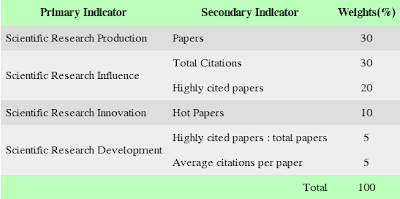
A recent article[ 1 ] looks at scientific research competitiveness of world universities in computer science, examining at individual university computer science departments as well countries as aggregates of their universities. The study looks at 233 university computer science departments, 127418 published papers, 468244 citations, 1856 highly cited papers and 57 hot papers over the last 10 years using data from Thomson. The evaluation criteria are (see the paper for more details): Canada as an aggregate region came in #4 after the USA, UK, Germany, followed by Italy. Canada had the third highest paper production, citations, and "hot" papers! For individual universities, only one Canadian university is in the top 23, with University of Toronto coming in at 16th . You can see the top 23 universities listed below: Stanford MIT UC Berkeley U Texas U Illinois Carnegie Mellon UCSD Georgia Inst Technol U Maryland Eth Zurich Technion Israel Inst Technol Princeton U Washingto...

Study on Canadian Science and Technology

The Canadian government's House of Commons Standing Committee on Industry, Science and Technology has released a press release describing a consultation which is looking for submissions from various sectors and regions in the following areas: Science advice to government; Commercialization, venture capital and intellectual property; Federally funded research performed in government and higher education; and “Big science” projects and Canada’s position in global science and technology. Submissions must less than 5 pages in length, and emailed in by April 18 2008. No indication of what file formats are accepted.

Canada to close National Science Advisor Office

I am sad to hear the Canadian government will be cutting the office and position of the National Science Advisor. Dr. Arthur Carty will be retiring in March 2008. He was first appointed in April 2004. In a country where there is a distinct lacuna in the area informed political decision-making about and around science, the loss of this office seems an unfortunate step backward. It may be that the science advisor office/position overlapped too much with the recently announced (Oct 2007) Industry Canada Science, Technology and Innovation Council . While this might be the case, it is not clear if the watering down of science into this council is the best thing for science in Canada.